Backend Engineering
Enterprise-grade backend systems, scalable APIs, and microservices architecture for real-time gaming platforms.
Learn more
High-Load Real-Time Gaming Platform Architecture on Kubernetes
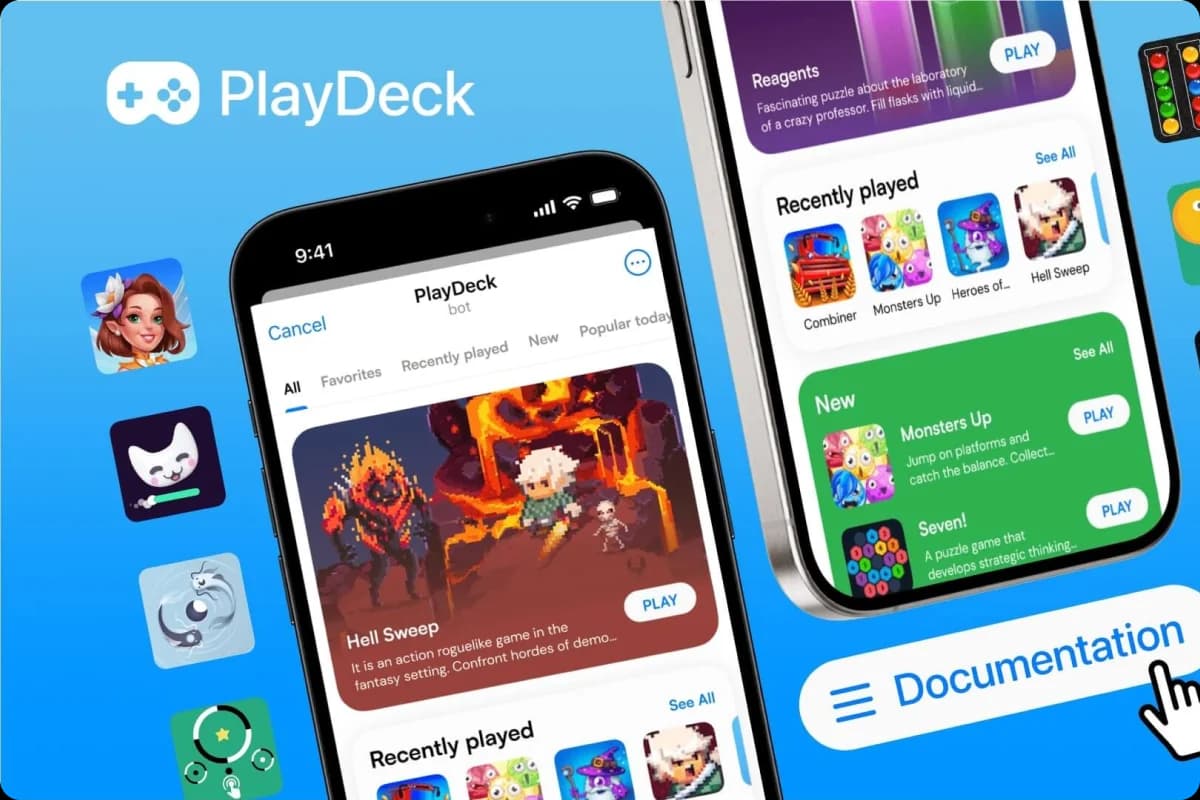
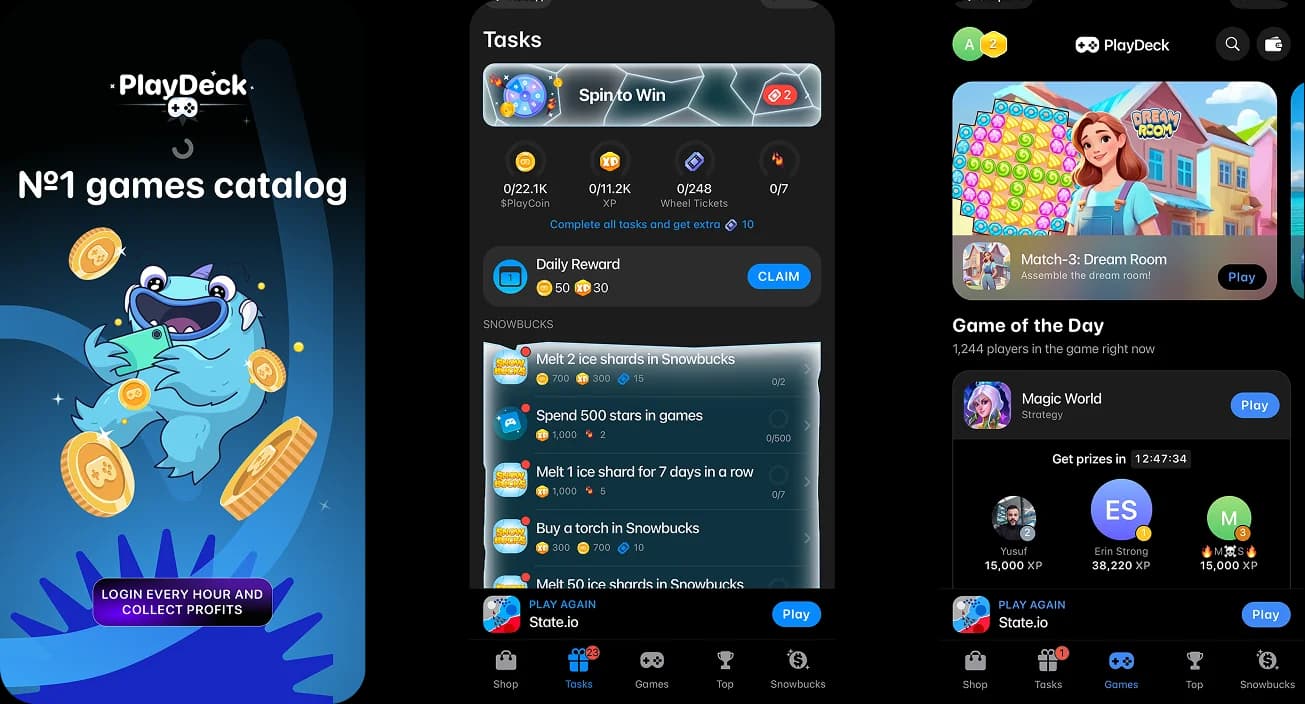
PlayDeck required a backend platform capable of supporting real-time interactions for a large and rapidly growing user base across Telegram mini-games, bots, payment flows, and in-chat experiences. The challenge was to design an enterprise-grade architecture with startup-level agility, suitable for unpredictable traffic spikes and frequent feature releases.
This case study describes a project-specific backend platform implemented for a single client under defined technical and operational conditions. Architectural descriptions are presented in an abstracted form.
PlayDeck's platform needed to handle: • Thousands of concurrent players across distributed game sessions • Real-time communication between bots, users, and backend services • High-frequency writes for payments, achievements, leaderboards, and game events • Horizontal scaling designed to handle load fluctuations • A developer toolkit enabling easy onboarding and monetization for game developers • Deep integration with Telegram platform APIs and in-chat payment mechanisms The system was designed for low-latency response times suitable for real-time gameplay and payment interactions, maintain stability under fluctuating traffic, and provide a foundation for long-term growth — without accumulating technical debt.
H-Studio designed and implemented the complete backend architecture — from system design and dataflow engineering to Kubernetes deployment, CI/CD pipelines, and observability. Microservices Architecture We decomposed the platform into isolated domain services: • User Service — authentication, profiles, sessions • Game Catalog Service — indexing, search, recommendations • Leaderboard Service — real-time ranking and aggregation • Payments Service — TON and Stars payment workflows • Notification Service — push events, engagement, reminders • Bot Gateway — secure channel between Telegram Bots and backend Each service runs in a containerized environment with autoscaling, load balancing, centralized logs, and isolated failure domains. Kubernetes & Cloud Platform The platform runs on a production-ready Kubernetes cluster with: • Horizontal and vertical autoscaling • Rolling deployments configured to minimize service interruptions • Service mesh–based communication • Secure API boundaries • Centralized monitoring and tracing Real-Time Event Processing For real-time state changes across games, bots, and users: • Apache Kafka handles event streaming • Redis powers caching, leaderboards, and delayed jobs • ClickHouse stores analytics and high-volume events This ensures low latency, predictable throughput, and high resilience. CI/CD & GitOps We implemented end-to-end CI/CD automation: • GitHub Actions pipelines • Automated build/test/deploy workflows • Security scanning and policy enforcement • Environment promotion (dev → stage → prod) • ArgoCD for GitOps-based deployments • Zero manual configuration changes Observability & Reliability We deployed a full observability stack: • Grafana dashboards • Prometheus metrics and alerts • Loki for logs • Distributed tracing for debugging • team communication and alerting channels This transformed operations from reactive to proactive. Security The architecture incorporates common security practices, including encrypted service communication, authenticated API access, automated security checks within CI/CD pipelines, and auditable secret management.
Backend: Java · Spring
Infrastructure: Docker · Kubernetes
Messaging: Apache Kafka
Caching: Redis
Analytics: ClickHouse
Monitoring: Grafana · Prometheus · Loki
CI/CD: GitHub Actions · ArgoCD
Duration: 12 months
Team: 5 engineers
• Real-time, high-load systems require event-driven design from day one. • Kubernetes + GitOps dramatically reduces operational overhead. • Modular microservices enable scaling without architectural rewrites. • Enterprise-grade infrastructure is achievable even for fast-moving startups. • Automation (CI/CD, monitoring, observability) is the foundation for platform reliability.
Discover our services that contributed to the implementation of this project.
Enterprise-grade backend systems, scalable APIs, and microservices architecture for real-time gaming platforms.
Learn moreProduction-ready Kubernetes clusters with auto-scaling, self-healing, and deployments designed to minimize downtime.
Learn moreAutomated CI/CD pipelines with GitHub Actions and ArgoCD for continuous integration and GitOps-based deployments.
Learn moreComplete observability stacks with Grafana, Prometheus, Loki, and distributed tracing for real-time monitoring.
Learn moreGitOps-based deployments with ArgoCD for declarative infrastructure management and automated rollouts.
Learn moreExplore our other enterprise projects and success stories.
Disclaimer: All architectural decisions, performance characteristics, and results described in this case study are project-specific observations and do not constitute guaranteed outcomes for other systems or environments.